
Quick Summary
A sticking sliding glass door is usually caused by one of three things: grit packed into the bottom track, worn or broken rollers, or a door that has dropped out of alignment over time. Most homeowners can clean the track, apply a silicone-based spray and turn the roller adjustment screws in under an hour with basic tools. If the door still drags or grinds after those steps, the rollers or the track itself likely need replacing, and that job is safer with a second set of hands because the glass panel is heavy.
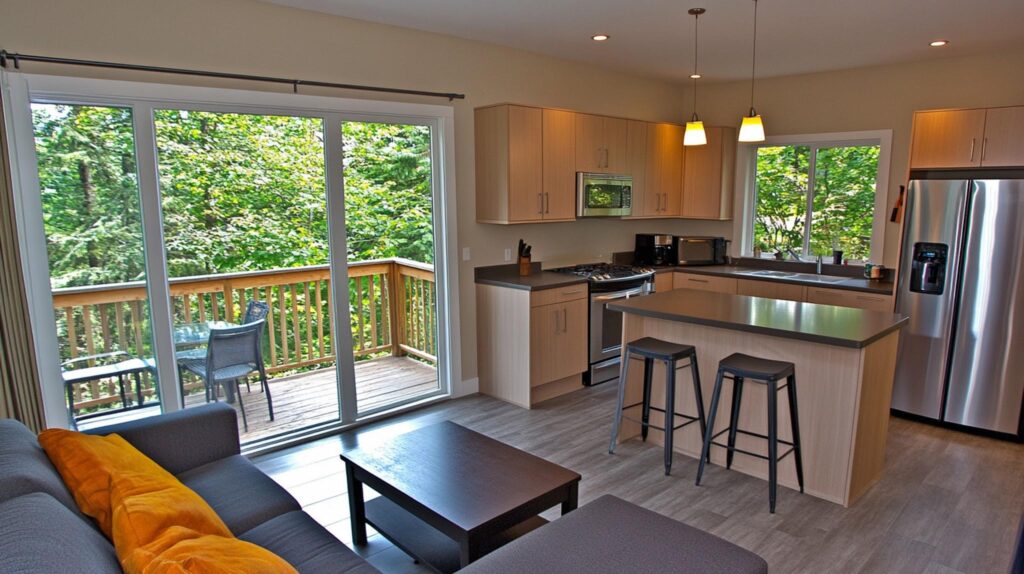
You grab the handle to step out onto the deck, and the door fights you the whole way. It drags, scrapes or jumps on the track, and every trip outside becomes a two-handed job. A sliding door that sticks is one of the most common complaints we hear from homeowners around Wilmington.
Many of the causes are simple to fix. Others point to worn parts that need sliding glass door repair before they get worse. Our team has been working on glass doors for homes and businesses across the area since 1995, and this guide covers what usually goes wrong and how to set it right.
Why Your Sliding Glass Door Is Sticking
Before reaching for a screwdriver, it helps to know what you are dealing with. These are the usual suspects, roughly from most to least common.
- Dirt and sand in the track: Near the coast, sand tracked in from the beach or yard settles in the bottom rail. Add pollen, pet hair and leaves, and the rollers end up grinding over a layer of grit.
- Worn or broken rollers: Small wheels under the door carry its full weight. Over the years they flatten, crack or rust, and the door starts to drag instead of roll.
- A bent or dented track: A dropped tool, heavy furniture or a hard slam can leave a dent in the metal rail. The rollers catch on that spot every time.
- A door that has dropped out of alignment: As rollers wear, the door sinks lower and the bottom edge can scrape the track or frame.
- Humidity and a settling house: Wilmington’s humid summers can swell wood and vinyl frames, and a house that settles over time can shift the opening slightly out of square.
- Worn weatherstripping: Torn or bunched seals along the edges can rub and slow the door down.
- Old or gummy lubricant: Grease and oil-based sprays attract sand and turn sticky, making the problem worse instead of better.
How To Fix A Sticking Sliding Glass Door Step By Step
Most of the time, a few simple steps bring a stiff slider back to life. You will need a vacuum with a crevice tool, a stiff brush or old toothbrush, mild dish soap, a rag, a silicone-based spray and a Phillips screwdriver.
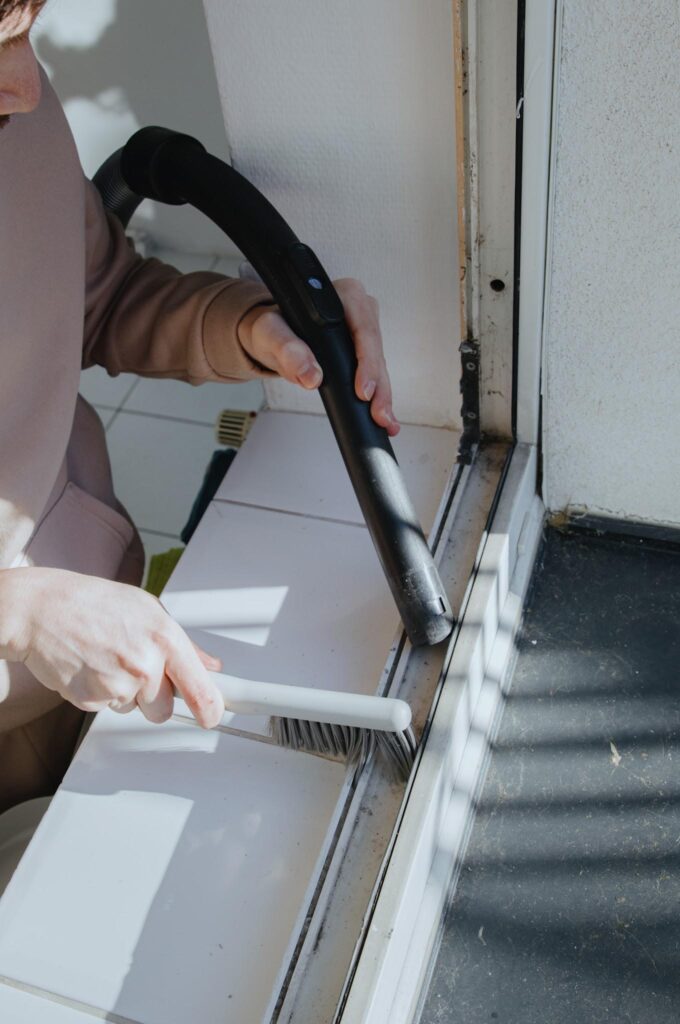
- Clean the track. Open the door as far as it goes and vacuum the bottom track from end to end. Scrub the rail with warm, soapy water and a brush to loosen packed-in grime, then wipe it completely dry. Repeat with the door slid the other way so you reach the section it was covering.
- Clean the top track too. Dust and cobwebs collect in the upper guide and can make the door feel stiff. A quick vacuum and wipe usually does it.
- Lubricate with silicone. Spray a light coat of silicone-based lubricant along the track and toward the rollers, then slide the door back and forth several times to spread it. Skip grease and heavy oils, which hold onto sand.
- Adjust the rollers. Look for small holes or plastic caps near the bottom corners of the door’s edge. Behind them are adjustment screws that raise or lower each roller. Turn each screw a quarter turn at a time, checking how the door rolls after each change, until it glides evenly without scraping the track.
- Check the weatherstripping and latch. Smooth out or replace any seal that is folded or torn, and make sure the latch lines up with its keeper so the door closes without a shove.
One safety note matters more than any of these steps. Sliding glass door panels are heavy and awkward, and they can tip or slip once they come off the track. Never try to lift a panel out on your own.
When A Sliding Door Sticks Because Of Worn Rollers Or A Bent Track
A door that keeps dragging after a cleaning and an adjustment usually has a hardware problem. Rollers that have flattened or cracked cannot be fixed with a screwdriver. Replacing them means lifting the panel out of the frame, swapping in the right parts for that door and setting it back on the track, which is a two-person job.
A bent track can sometimes be straightened or covered with a cap, but a badly damaged one may need replacing. Cracked glass, fogged panes or failed seals are also signs it is time for a professional, since those repairs involve handling the glass itself. If your door is broken rather than just sticky, our guide on repairing a broken sliding glass door in Wilmington walks through those situations.
Roller replacement often brings an old door back to how it felt when it was new. One customer, Alan, said in a 5-star review that the team “fixed our sliding glass door rollers so they act new.” Sometimes the right parts have to be ordered first. Deb described in a 4-star review how the crew came out to look at the problem, then “ordered the parts and came back and fixed the door.”
Keeping Your Sliding Glass Door Rolling Smoothly
A little routine care goes a long way, especially in a coastal town where sand finds its way into everything.
- Sweep or vacuum the bottom track every week or two during beach season.
- Wipe the track and add a light coat of silicone spray a few times a year.
- Keep a doormat on both sides of the door to catch sand before it reaches the rail.
- Pay attention to new noises, since grinding or squeaking is often the first sign of a worn roller.
For more on heading off problems before they start, see our article on common issues with sliding patio doors.
Sticking Sliding Glass Doors In Businesses
Offices, restaurants and shops with sliding glass doors face the same problems, only faster. A door that opens hundreds of times a day wears through rollers and collects grit far more quickly than a back patio door. A sticking entry can also be a safety concern for staff and customers. If your business relies on glass doors, our commercial glass doors page covers the systems we install and service.
For homeowners, the simple summary is this: clean, lubricate and adjust first, and call for help if the door still sticks. You can learn more through our residential glass services, and estimates are free.
FAQs
Look for a silicone-based dry spray, and check the label before you buy. Words like dry film or non-staining are a good sign, since a product that leaves a wet, oily coat will pull in sand within days. Spray it onto a cloth first when working near carpet or flooring, then wipe it along the track.
Start by confirming the lock and any security bar are fully released, since a half-engaged latch is a common reason a slider will not move at all. If it still will not budge, stop pushing. Forcing a jammed panel can bend the track or pop the door off its rollers, which turns a small repair into a bigger one.
The timing of the problem is the best clue to what changed. If the problem comes and goes with the weather, humidity is the likely cause and the fix may be as simple as an adjustment. If it gets steadily worse week by week, a worn part is more likely, and it is worth having it looked at before it fails.
Call (910) 452-4155 to request a quote with Atlantic Glass.